.%20--%3e%3cpolygon%20points='5,18.5%2024,28%2024,43%205,33.5'%20fill='%2333506b'%20stroke='%2333506b'%20stroke-width='0.6'%20stroke-linejoin='round'/%3e%3cpolygon%20points='43,18.5%2024,28%2024,43%2043,33.5'%20fill='%2324384b'%20stroke='%2324384b'%20stroke-width='0.6'%20stroke-linejoin='round'/%3e%3cpolygon%20points='24,9%2043,18.5%2024,28%205,18.5'%20fill='%237c8fa0'%20stroke='%237c8fa0'%20stroke-width='0.6'%20stroke-linejoin='round'/%3e%3c!--%20Machined%20pocket%20on%20the%20top%20face%20--%3e%3cpolygon%20points='24,15.65%2029.7,18.5%2024,21.35%2018.3,18.5'%20fill='%2324384b'%20stroke='%2324384b'%20stroke-width='0.6'%20stroke-linejoin='round'/%3e%3c!--%20End%20mill%20descending%20into%20the%20pocket:%20narrow%20steel%20cylinder%20(bottom%20lip%20first,%20then%20the%20two%20body%20halves%20paint%20over%20its%20back%20half,%20then%20the%20lit%20top%20cap).%20--%3e%3cellipse%20cx='24'%20cy='18.9'%20rx='2.7'%20ry='1.35'%20fill='%2379899a'/%3e%3cpolygon%20points='21.3,6.35%2024,6.35%2024,18.9%2021.3,18.9'%20fill='%23c4cfd8'%20stroke='%23c4cfd8'%20stroke-width='0.6'%20stroke-linejoin='round'/%3e%3cpolygon%20points='24,6.35%2026.7,6.35%2026.7,18.9%2024,18.9'%20fill='%2393a3b2'%20stroke='%2393a3b2'%20stroke-width='0.6'%20stroke-linejoin='round'/%3e%3cellipse%20cx='24'%20cy='6.35'%20rx='2.7'%20ry='1.35'%20fill='%23e8ecef'/%3e%3c/svg%3e)

,%20so%20the%20process%20colour%20lives%20in%20the%20beam%20and%20the%20sparks.%20Beam%20+%20spark%20palette%20is%20shared%20with%20iso-tube-laser-cutting.svg%20so%20both%20lasers%20read%20as%20siblings.%20--%3e%3cpolygon%20points='5,25.77%2027.09,36.81%2027.09,38.58%205,27.53'%20fill='%237d8b97'%20stroke='%237d8b97'%20stroke-width='0.6'%20stroke-linejoin='round'/%3e%3cpolygon%20points='43,28.86%2027.09,36.81%2027.09,38.58%2043,30.63'%20fill='%2363717d'%20stroke='%2363717d'%20stroke-width='0.6'%20stroke-linejoin='round'/%3e%3cpolygon%20points='20.91,17.81%2043,28.86%2027.09,36.81%205,25.77'%20fill='%23aab6c0'%20stroke='%23aab6c0'%20stroke-width='0.6'%20stroke-linejoin='round'/%3e%3c!--%20Kerf%20trailing%20behind%20the%20contact%20point%20--%3e%3cpolygon%20points='22.6,26.8%2030.6,30.8%2029.3,31.45%2021.3,27.45'%20fill='%234a5661'%20stroke='%234a5661'%20stroke-width='0.6'%20stroke-linejoin='round'/%3e%3c!--%20Beam:%20soft%20sheath%20+%20hot%20core%20--%3e%3cline%20x1='22.6'%20y1='8'%20x2='22.6'%20y2='26.8'%20stroke='%23fde68a'%20stroke-width='3.2'%20stroke-linecap='round'%20opacity='0.45'/%3e%3cline%20x1='22.6'%20y1='8'%20x2='22.6'%20y2='26.8'%20stroke='%23facc15'%20stroke-width='1.6'%20stroke-linecap='round'/%3e%3c!--%20Sparks%20fanning%20back%20off%20the%20kerf%20--%3e%3cline%20x1='23.9'%20y1='25.8'%20x2='26.1'%20y2='23.7'%20stroke='%23f59e0b'%20stroke-width='1'%20stroke-linecap='round'/%3e%3cline%20x1='24.4'%20y1='26.9'%20x2='27.3'%20y2='25.9'%20stroke='%23f59e0b'%20stroke-width='0.9'%20stroke-linecap='round'/%3e%3cline%20x1='23.4'%20y1='24.9'%20x2='24.8'%20y2='22.5'%20stroke='%23f59e0b'%20stroke-width='0.85'%20stroke-linecap='round'/%3e%3ccircle%20cx='27.9'%20cy='22'%20r='0.7'%20fill='%23fbbf24'/%3e%3ccircle%20cx='29.5'%20cy='24.9'%20r='0.55'%20fill='%23fbbf24'/%3e%3ccircle%20cx='25.7'%20cy='20.6'%20r='0.45'%20fill='%23fbbf24'/%3e%3ccircle%20cx='22.6'%20cy='26.8'%20r='1.5'%20fill='%23fde68a'/%3e%3c/svg%3e)
%20to%20+Y%20(flange),%20so%20the%20fillet%20carries%20the%20tonal%20transition%20that%20a%20hard%20crease%20line%20used%20to%20fake.%20The%20sheet%20is%20steel,%20so%20this%20fillet%20is%20the%20only%20accent-coloured%20surface%20—%20the%20bend%20IS%20the%20process.%20Radius%20widened%20from%20the%20original%20so%20the%20accent%20band%20still%20reads%20at%2024px.%20--%3e%3clinearGradient%20id='og-bend-roll'%20gradientUnits='userSpaceOnUse'%20x1='21.161'%20y1='29.326'%20x2='27.2'%20y2='23.554'%3e%3cstop%20offset='0'%20stop-color='%238ec5b7'/%3e%3cstop%20offset='0.5'%20stop-color='%2355978a'/%3e%3cstop%20offset='1'%20stop-color='%232f7d6b'/%3e%3c/linearGradient%3e%3c/defs%3e%3c!--%20Side%20profile:%20flange,%20rounded%20outer%20fillet,%20panel,%20tighter%20inner%20fillet.%20--%3e%3cpath%20d='M41.22%2017.49%20L36.19%2028.049%20Q34.47%2031.66%2030.151%2033.821%20L22.98%2037.41%20L22.98%2039.51%20L34.333%2033.828%20Q35.63%2033.179%2036.039%2032.321%20L43%2017.71%20Z'%20fill='%2363717d'%20stroke='%2363717d'%20stroke-width='0.6'%20stroke-linejoin='round'/%3e%3cpolygon%20points='23.24,8.49%2041.22,17.49%2043,17.71%2025.02,8.72'%20fill='%2363717d'%20stroke='%2363717d'%20stroke-width='0.6'%20stroke-linejoin='round'/%3e%3cpolygon%20points='18.21,19.059%2036.19,28.049%2041.22,17.49%2023.24,8.49'%20fill='%237d8b97'%20stroke='%237d8b97'%20stroke-width='0.6'%20stroke-linejoin='round'/%3e%3cpath%20d='M12.171%2024.831%20Q16.49%2022.67%2018.21%2019.059%20L36.19%2028.049%20Q34.47%2031.66%2030.151%2033.821%20Z'%20fill='url(%23og-bend-roll)'%20stroke='url(%23og-bend-roll)'%20stroke-width='0.6'%20stroke-linejoin='round'/%3e%3cpolygon%20points='5,28.42%2022.98,37.41%2022.98,39.51%205,30.51'%20fill='%237d8b97'%20stroke='%237d8b97'%20stroke-width='0.6'%20stroke-linejoin='round'/%3e%3cpolygon%20points='12.171,24.831%2030.151,33.821%2022.98,37.41%205,28.42'%20fill='%23aab6c0'%20stroke='%23aab6c0'%20stroke-width='0.6'%20stroke-linejoin='round'/%3e%3c/svg%3e)


%3c/title%3e%3c!--%20Three%20isometric%20slabs,%20painted%20bottom-up%20so%20the%20top%20(blue)%20slab%20occludes%20the%20ones%20below.%20Each%20hue%20=%20a%20finish.%20--%3e%3cg%20id='tile-teal'%20stroke-linejoin='round'%20stroke-width='0.6'%3e%3cpolygon%20points='12,30%2024,35.5%2024,39%2012,33.5'%20fill='%2312b3a6'%20stroke='%2312b3a6'/%3e%3cpolygon%20points='24,35.5%2036,30%2036,33.5%2024,39'%20fill='%230b8478'%20stroke='%230b8478'/%3e%3cpolygon%20points='24,24.5%2036,30%2024,35.5%2012,30'%20fill='%2354dccb'%20stroke='%2354dccb'/%3e%3c/g%3e%3cg%20id='tile-violet'%20stroke-linejoin='round'%20stroke-width='0.6'%3e%3cpolygon%20points='12,22%2024,27.5%2024,31%2012,25.5'%20fill='%237b5fe0'%20stroke='%237b5fe0'/%3e%3cpolygon%20points='24,27.5%2036,22%2036,25.5%2024,31'%20fill='%235533b8'%20stroke='%235533b8'/%3e%3cpolygon%20points='24,16.5%2036,22%2024,27.5%2012,22'%20fill='%23b199ff'%20stroke='%23b199ff'/%3e%3c/g%3e%3cg%20id='tile-blue'%20stroke-linejoin='round'%20stroke-width='0.6'%3e%3cpolygon%20points='12,14%2024,19.5%2024,23%2012,17.5'%20fill='%231f86f0'%20stroke='%231f86f0'/%3e%3cpolygon%20points='24,19.5%2036,14%2036,17.5%2024,23'%20fill='%230a5ec4'%20stroke='%230a5ec4'/%3e%3cpolygon%20points='24,8.5%2036,14%2024,19.5%2012,14'%20fill='%236bb2ff'%20stroke='%236bb2ff'/%3e%3c/g%3e%3c/svg%3e)
%3c/title%3e%3c!--%20A%20wide%20teal%20base%20slab%20(the%20single%20kit%20reference)%20with%20two%20smaller%20cubes%20—%20blue%20and%20violet,%20distinct%20parts%20—%20resting%20on%20it,%20touching%20at%20the%20centre:%20several%20parts%20joined%20as%20one%20orderable%20unit.%20Painted%20back%20to%20front.%20--%3e%3cg%20id='base-slab'%20stroke-linejoin='round'%20stroke-width='0.6'%3e%3cpolygon%20points='12,29%2024,34.5%2024,39%2012,33.5'%20fill='%2312b3a6'%20stroke='%2312b3a6'/%3e%3cpolygon%20points='24,34.5%2036,29%2036,33.5%2024,39'%20fill='%230b8478'%20stroke='%230b8478'/%3e%3cpolygon%20points='24,23.5%2036,29%2024,34.5%2012,29'%20fill='%2354dccb'%20stroke='%2354dccb'/%3e%3c/g%3e%3cg%20id='part-blue'%20stroke-linejoin='round'%20stroke-width='0.6'%3e%3cpolygon%20points='13,20.5%2018.5,23.25%2018.5,29.75%2013,27'%20fill='%231f86f0'%20stroke='%231f86f0'/%3e%3cpolygon%20points='18.5,23.25%2024,20.5%2024,27%2018.5,29.75'%20fill='%230a5ec4'%20stroke='%230a5ec4'/%3e%3cpolygon%20points='18.5,17.75%2024,20.5%2018.5,23.25%2013,20.5'%20fill='%236bb2ff'%20stroke='%236bb2ff'/%3e%3c/g%3e%3cg%20id='part-violet'%20stroke-linejoin='round'%20stroke-width='0.6'%3e%3cpolygon%20points='24,23.5%2029.5,26.25%2029.5,32.75%2024,30'%20fill='%237b5fe0'%20stroke='%237b5fe0'/%3e%3cpolygon%20points='29.5,26.25%2035,23.5%2035,30%2029.5,32.75'%20fill='%235533b8'%20stroke='%235533b8'/%3e%3cpolygon%20points='29.5,20.75%2035,23.5%2029.5,26.25%2024,23.5'%20fill='%23b199ff'%20stroke='%23b199ff'/%3e%3c/g%3e%3c/svg%3e)
%3c/title%3e%3c!--%20One%20big%20cube%20subdivided%20into%20small%20cubes:%20SKU%20combinations%20composing%20a%20single%20flagship%20product.%20Same%20footprint%20as%20iso-cnc-block;%20each%20visible%20small%20cube%20keeps%20one%20hue%20across%20its%20faces%20(top%20=%20light,%20left%20=%20mid,%20right%20=%20dark).%20--%3e%3cg%20id='top-face'%20stroke-linejoin='round'%20stroke-width='0.6'%3e%3cpolygon%20points='24,10.5%2030.5,13.75%2024,17%2017.5,13.75'%20fill='%236bb2ff'%20stroke='%236bb2ff'/%3e%3cpolygon%20points='30.5,13.75%2037,17%2030.5,20.25%2024,17'%20fill='%23b199ff'%20stroke='%23b199ff'/%3e%3cpolygon%20points='24,17%2030.5,20.25%2024,23.5%2017.5,20.25'%20fill='%236bb2ff'%20stroke='%236bb2ff'/%3e%3cpolygon%20points='17.5,13.75%2024,17%2017.5,20.25%2011,17'%20fill='%2354dccb'%20stroke='%2354dccb'/%3e%3c/g%3e%3cg%20id='left-face'%20stroke-linejoin='round'%20stroke-width='0.6'%3e%3cpolygon%20points='11,17%2017.5,20.25%2017.5,26.25%2011,23'%20fill='%2312b3a6'%20stroke='%2312b3a6'/%3e%3cpolygon%20points='17.5,20.25%2024,23.5%2024,29.5%2017.5,26.25'%20fill='%231f86f0'%20stroke='%231f86f0'/%3e%3cpolygon%20points='11,23%2017.5,26.25%2017.5,32.25%2011,29'%20fill='%237b5fe0'%20stroke='%237b5fe0'/%3e%3cpolygon%20points='17.5,26.25%2024,29.5%2024,35.5%2017.5,32.25'%20fill='%2312b3a6'%20stroke='%2312b3a6'/%3e%3c/g%3e%3cg%20id='right-face'%20stroke-linejoin='round'%20stroke-width='0.6'%3e%3cpolygon%20points='24,23.5%2030.5,20.25%2030.5,26.25%2024,29.5'%20fill='%230a5ec4'%20stroke='%230a5ec4'/%3e%3cpolygon%20points='30.5,20.25%2037,17%2037,23%2030.5,26.25'%20fill='%235533b8'%20stroke='%235533b8'/%3e%3cpolygon%20points='24,29.5%2030.5,26.25%2030.5,32.25%2024,35.5'%20fill='%230b8478'%20stroke='%230b8478'/%3e%3cpolygon%20points='30.5,26.25%2037,23%2037,29%2030.5,32.25'%20fill='%230a5ec4'%20stroke='%230a5ec4'/%3e%3c/g%3e%3c/svg%3e)
%3c/title%3e%3c!--%20Three%20isometric%20pillars%20at%20descending%20heights:%20stock%20levels%20across%20references.%20--%3e%3cg%20id='pillar-high-blue'%20stroke-linejoin='round'%20stroke-width='0.6'%3e%3cpolygon%20points='5,9%2011,12%2011,32%205,29'%20fill='%231f86f0'%20stroke='%231f86f0'/%3e%3cpolygon%20points='11,12%2017,9%2017,29%2011,32'%20fill='%230a5ec4'%20stroke='%230a5ec4'/%3e%3cpolygon%20points='5,9%2011,6%2017,9%2011,12'%20fill='%236bb2ff'%20stroke='%236bb2ff'/%3e%3c/g%3e%3cg%20id='pillar-mid-violet'%20stroke-linejoin='round'%20stroke-width='0.6'%3e%3cpolygon%20points='18,23.5%2024,26.5%2024,38.5%2018,35.5'%20fill='%237b5fe0'%20stroke='%237b5fe0'/%3e%3cpolygon%20points='24,26.5%2030,23.5%2030,35.5%2024,38.5'%20fill='%235533b8'%20stroke='%235533b8'/%3e%3cpolygon%20points='18,23.5%2024,20.5%2030,23.5%2024,26.5'%20fill='%23b199ff'%20stroke='%23b199ff'/%3e%3c/g%3e%3cg%20id='pillar-low-teal'%20stroke-linejoin='round'%20stroke-width='0.6'%3e%3cpolygon%20points='31,36%2037,39%2037,45%2031,42'%20fill='%2312b3a6'%20stroke='%2312b3a6'/%3e%3cpolygon%20points='37,39%2043,36%2043,42%2037,45'%20fill='%230b8478'%20stroke='%230b8478'/%3e%3cpolygon%20points='31,36%2037,33%2043,36%2037,39'%20fill='%2354dccb'%20stroke='%2354dccb'/%3e%3c/g%3e%3c/svg%3e)
Injection molding, from a validated tool to a run that doesn't drift.
Aluminum prototype tooling or hardened production steel, single-cavity or family molds — designed, sampled and run by the same engineer who quoted it. Not a marketplace forwarding your file to a mold shop it's never audited.
Quick definition
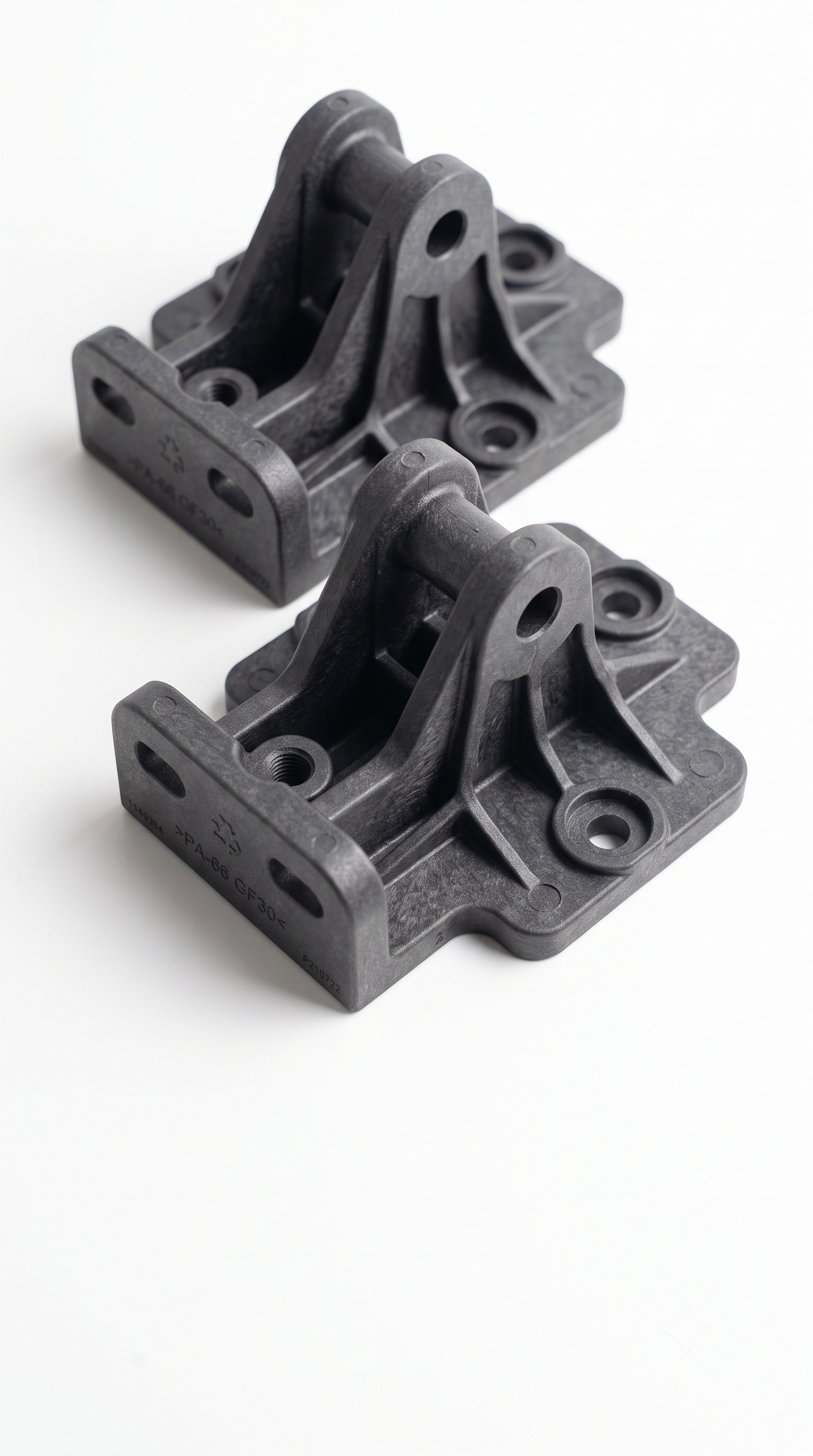
Injection molding is a manufacturing process where plastic resin is heated to a molten state, injected under pressure into a steel or aluminum mold cavity, cooled, and ejected as a finished part. It's the standard process for producing identical plastic parts at volume — from a few hundred prototypes off a soft aluminum tool to millions of parts off a hardened production mold.
,%20the%20injection%20unit%20is%20machine%20hardware%20(same%20steel%20tones%20as%20the%20CNC%20end%20mill),%20and%20the%20melt%20keeps%20the%20pale%20accent%20tone%20so%20the%20material%20reads%20as%20what%20fills%20the%20mold.%20--%3e%3c!--%20Closed%20mold:%20two%20halves%20clamped%20shut%20--%3e%3cpolygon%20points='9,23.5%2024,31%2024,43.5%209,36'%20fill='%230a7a45'%20stroke='%230a7a45'%20stroke-width='0.6'%20stroke-linejoin='round'/%3e%3cpolygon%20points='39,23.5%2024,31%2024,43.5%2039,36'%20fill='%23075530'%20stroke='%23075530'%20stroke-width='0.6'%20stroke-linejoin='round'/%3e%3cpolygon%20points='24,16%2039,23.5%2024,31%209,23.5'%20fill='%2362aa88'%20stroke='%2362aa88'%20stroke-width='0.6'%20stroke-linejoin='round'/%3e%3c!--%20Parting%20line%20--%3e%3cline%20x1='9'%20y1='29.75'%20x2='24'%20y2='37.25'%20stroke='%23075530'%20stroke-width='1.4'%20stroke-linecap='round'/%3e%3cline%20x1='39'%20y1='29.75'%20x2='24'%20y2='37.25'%20stroke='%230a7a45'%20stroke-width='1.4'%20stroke-linecap='round'/%3e%3c!--%20Sprue%20opening%20in%20the%20top%20face%20--%3e%3cpolygon%20points='24,21.4%2028.2,23.5%2024,25.6%2019.8,23.5'%20fill='%23075530'%20stroke='%23075530'%20stroke-width='0.6'%20stroke-linejoin='round'/%3e%3c!--%20The%20shot:%20melt%20forced%20through%20the%20sprue%20into%20the%20closed%20mold%20--%3e%3cellipse%20cx='24'%20cy='24.2'%20rx='1.9'%20ry='0.95'%20fill='%23acd2c0'/%3e%3cpolygon%20points='22.1,19.5%2025.9,19.5%2025.9,24.2%2022.1,24.2'%20fill='%23acd2c0'%20stroke='%230a7a45'%20stroke-width='0.7'%20stroke-linejoin='round'/%3e%3c!--%20Nozzle%20(lip%20first,%20then%20the%20two%20flanks%20paint%20over%20its%20back%20half)%20--%3e%3cellipse%20cx='24'%20cy='19.5'%20rx='1.9'%20ry='0.95'%20fill='%2379899a'/%3e%3cpolygon%20points='20.8,17%2024,17%2024,19.5%2022.1,19.5'%20fill='%23c4cfd8'%20stroke='%23c4cfd8'%20stroke-width='0.6'%20stroke-linejoin='round'/%3e%3cpolygon%20points='24,17%2027.2,17%2025.9,19.5%2024,19.5'%20fill='%2393a3b2'%20stroke='%2393a3b2'%20stroke-width='0.6'%20stroke-linejoin='round'/%3e%3c!--%20Barrel%20--%3e%3cpolygon%20points='20.8,12.5%2024,12.5%2024,17%2020.8,17'%20fill='%23c4cfd8'%20stroke='%23c4cfd8'%20stroke-width='0.6'%20stroke-linejoin='round'/%3e%3cpolygon%20points='24,12.5%2027.2,12.5%2027.2,17%2024,17'%20fill='%2393a3b2'%20stroke='%2393a3b2'%20stroke-width='0.6'%20stroke-linejoin='round'/%3e%3c!--%20Hopper:%20material%20fed%20in%20at%20the%20top%20--%3e%3cpolygon%20points='18,6.5%2024,6.5%2024,12.5%2020.8,12.5'%20fill='%23c4cfd8'%20stroke='%23c4cfd8'%20stroke-width='0.6'%20stroke-linejoin='round'/%3e%3cpolygon%20points='24,6.5%2030,6.5%2027.2,12.5%2024,12.5'%20fill='%2393a3b2'%20stroke='%2393a3b2'%20stroke-width='0.6'%20stroke-linejoin='round'/%3e%3cellipse%20cx='24'%20cy='6.5'%20rx='6'%20ry='3'%20fill='%23e8ecef'/%3e%3cellipse%20cx='24'%20cy='6.5'%20rx='3.2'%20ry='1.6'%20fill='%23acd2c0'/%3e%3c/svg%3e)
The flow
How an injection molding program runs, start to finish.
Design & DFM
An engineer reviews wall thickness, draft angle and undercuts against the mold itself, not just the part — free, before you accept the quote.
Tooling
Aluminum for a prototype or bridge run, hardened P20 or H13 steel for production — cut to the cavitation your volume justifies, not oversold.
T0 / T1 sampling
First shots off the tool are measured against your drawing before you sign off. Anything off-spec is corrected before one production part ships.
Production run
Every subsequent shot runs to the same validated tool and process — inspected, tracked and shipped under the same quote as day one.
Proof, not a claim
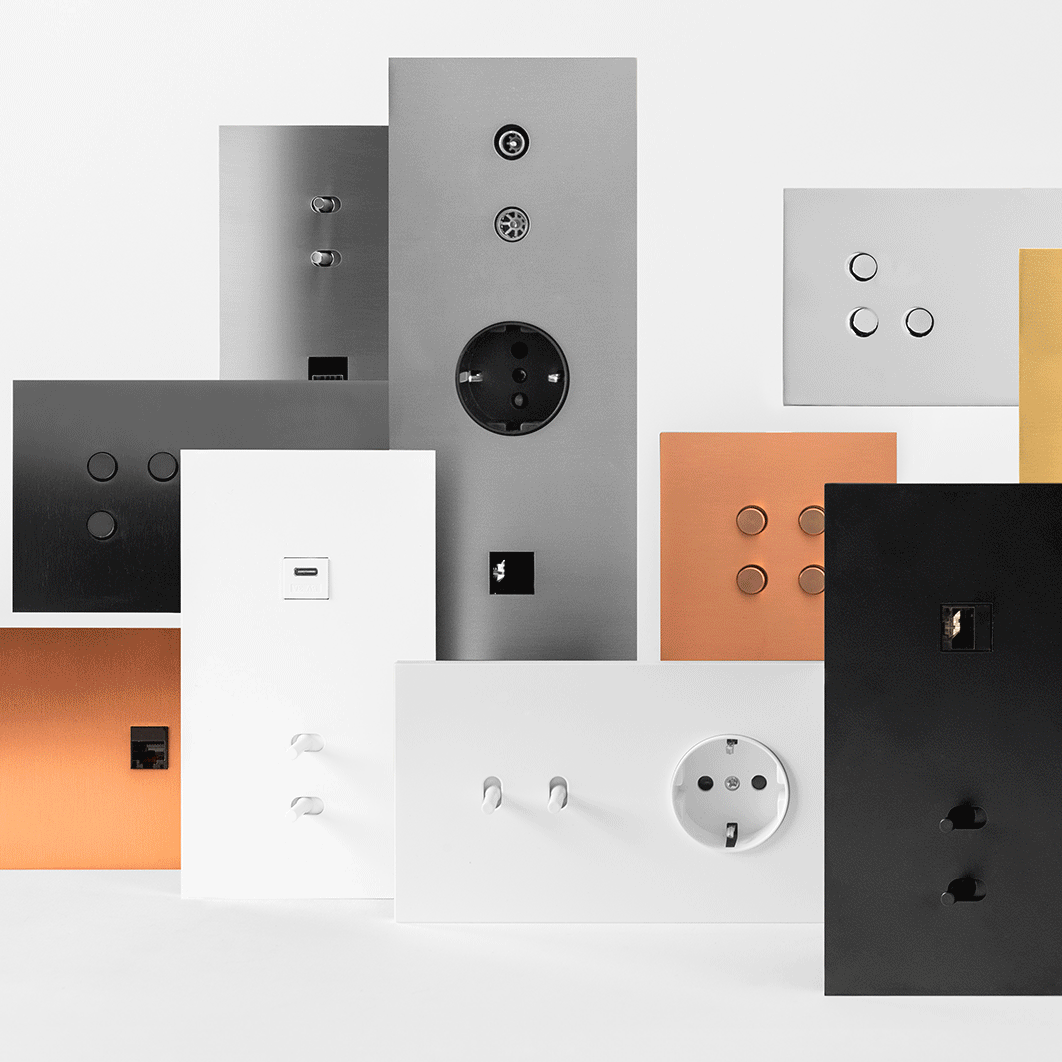
A designer switch brand runs its entire injection-molded catalog on this exact process.
Wall switches, sockets and cover plates, sold as a configurator of finishes and positions — 100% of design, tooling, manufacturing and invoicing delegated to OperGo, billing millions of euros a year on a catalog the brand never had to build a factory to support.
Read the full case study →Resins
Materials, matched to what the part needs to do.
ABS
Tough, machinable and paintable — a common default for injection-molded enclosures.
Polycarbonate (PC)
Optically clear and impact-resistant — lenses, covers and parts that need to survive a drop.
Polypropylene (PP)
A low-cost, chemical-resistant workhorse with a natural living-hinge flex — caps, closures and housings.
Nylon (PA6 / PA66)
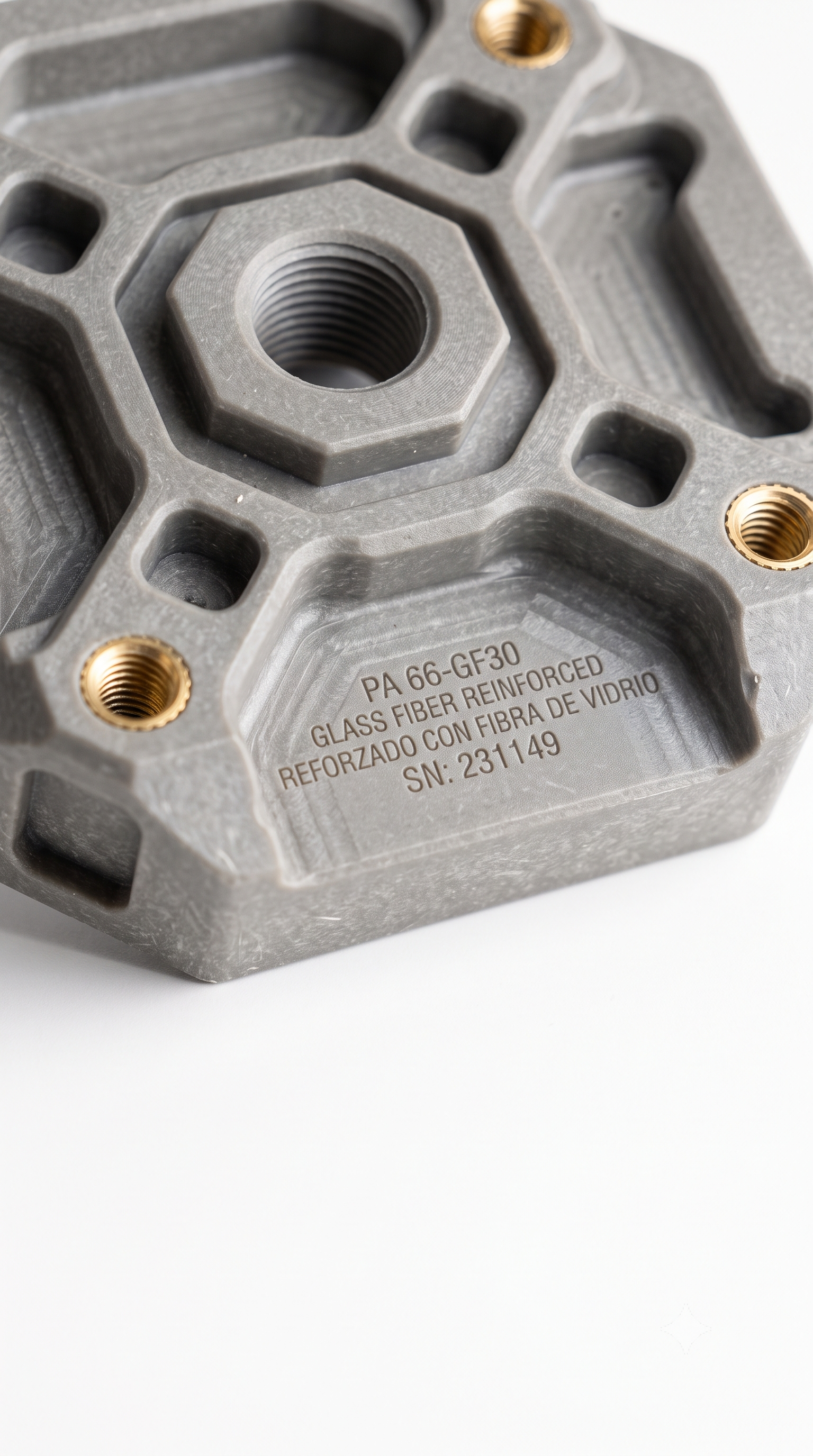
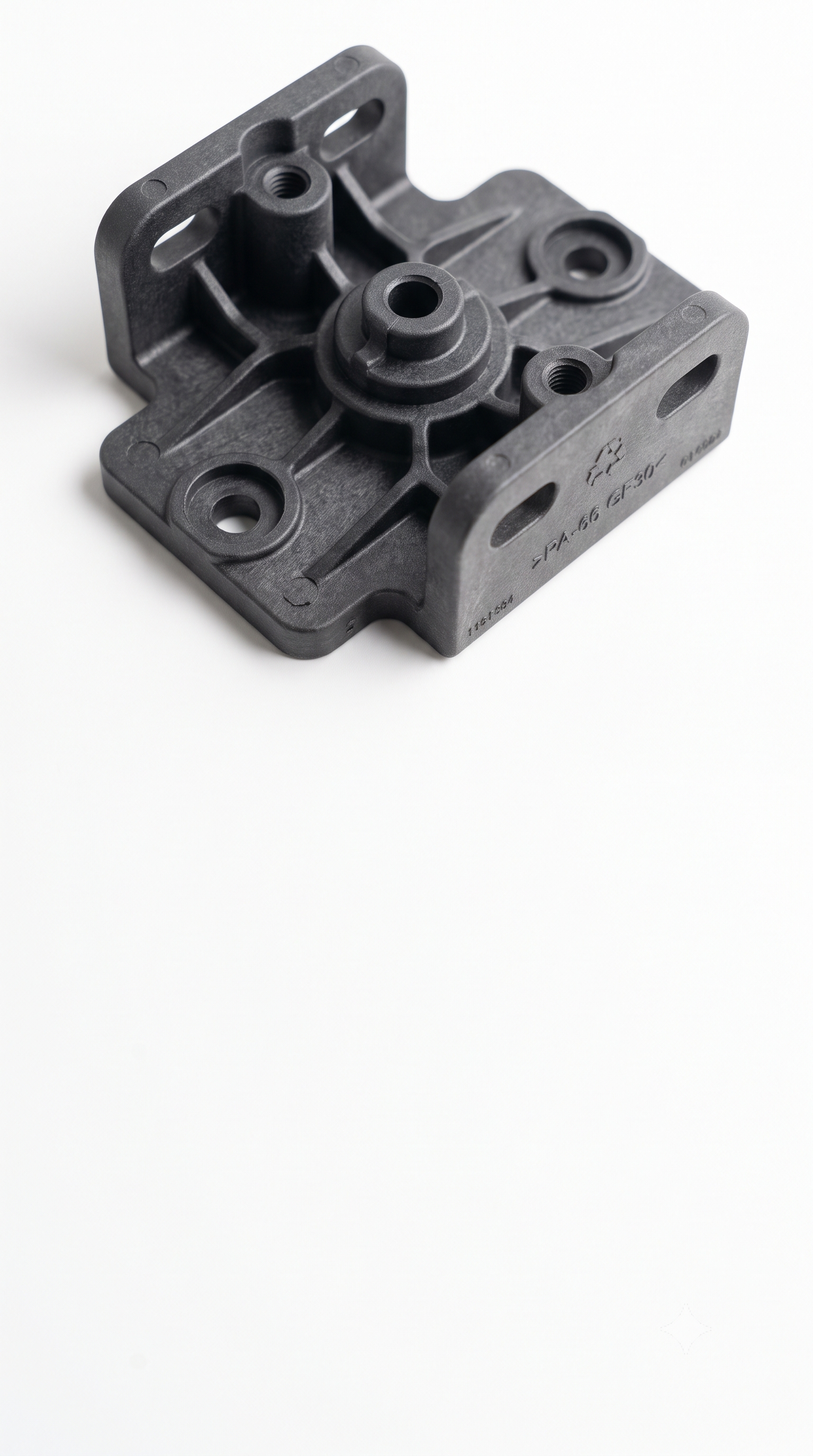
Wear-resistant and strong enough to replace metal in gears, clips and load-bearing housings.
POM (Acetal / Delrin)
Low-friction, dimensionally stable — the default for precision gears, snap-fits and moving mechanisms.
TPE / TPU
Soft-touch, flexible resin overmolded onto a rigid substrate for grips, seals and buttons.
PEEK
High-performance polymer for parts that need to survive heat, chemicals or repeated sterilization.
Full range of materials and finishes on Materials & finishes →
The spec sheet
Tooling, tolerance and secondary ops.
Not sure this is the right process yet?
Find your break-even before you talk tooling.
Interactive · rule of thumb
CNC or injection molding — where's your break-even?
CNC machining likely wins
At 251 units of a moderate part, mold tooling is hard to fully amortize — CNC keeps you off the hook for tooling cost and lead time.
Ballpark based on typical tooling payback — not a quote. The real number depends on your actual geometry, material and finish. Send the part for real numbers →
Beyond a single cavity
Specialized applications.
Overmolding & insert molding
A soft-touch TPE grip molded over a rigid ABS or nylon handle, or a threaded metal insert set into a boss instead of tapped afterward. It's a tooling decision made at the DFM stage — the two materials need to bond or mechanically lock, which changes gate placement and cooling.
Traceability & certified production
Every shot is traceable to a lot and a validated tool, with material certificates and dimensional reports available for any run. If your project has specific certification or documentation requirements, tell us early — it determines which facility and process route the job takes.
Full-catalog family tooling
Multiple related parts cut into one tool and priced as a matrix, not separate RFQs — the exact pattern behind running a switch, socket and cover-plate catalog as billions of orderable combinations.
Injection molding, answered
What's the real difference between a prototype mold and a production mold?
A prototype (or "bridge") tool is usually machined from aluminum — faster and cheaper to cut, good for anywhere from a few hundred to a few thousand shots before wear shows in cosmetic surfaces. A production tool is hardened steel (typically P20 or H13), costs more and takes longer to build, but is rated for hundreds of thousands of shots with tighter, more repeatable tolerances over the life of the tool.
What is a T0 sample, and what happens if it doesn't match the drawing?
T0 is the first set of parts pulled off a newly cut mold, measured against your drawing before the tool is signed off. If a dimension is out of spec, the tool gets adjusted — steel added or removed from the cavity — and re-sampled (T1, T2…) until it passes. Nothing ships to production on an unvalidated tool.
How many shots can a mold actually produce before it wears out?
It depends on the tooling material and the resin. Aluminum tools handle roughly hundreds to a few thousand shots before cosmetic wear; hardened steel tools are built for hundreds of thousands. Glass- or mineral-filled resins are abrasive and shorten cavity life faster than unfilled plastic, which is worth flagging to your engineer before the tool is cut, not after.
Can a CNC-machined prototype go straight to a production mold without changes?
Rarely as-is. CNC tolerates sharp internal corners, zero-draft walls and certain undercuts that a mold can't release without extra tooling (slides, lifters) or a redesign. The geometry usually needs a draft-angle and wall-uniformity pass first — see the DFM guide, or send the CNC file and an engineer will flag exactly what needs to change.
My part was designed for 3D printing — can it be injection molded?
Usually yes, after an adaptation pass. Printing tolerates geometry a mold can't fill or release — sharp internal corners, uneven walls, solid sections, undercuts — so a print-ready file rarely molds as drawn. Send it anyway: an engineer prices it for molding and flags that it'll need adapting; once you approve the quote, the DFM pass reworks the geometry with you — draft angles, uniform walls, ribs instead of solid volume — alongside the mold makers who'll actually build the tool, and the part still works and looks the way you designed it. And if your volume doesn't justify tooling yet, they'll say so and quote a printed batch or urethane casting instead.
What's a family mold, and when does it make sense?
A family mold cuts several different part cavities into one tool, so they run — and ship — together. It's cost-efficient when the parts are used in matched sets and need similar volumes, the way a switch, socket and cover-plate set shares one tooling strategy. The tradeoff: if one cavity wears or breaks, the whole set is held up until it's fixed.
Why do parts warp or show sink marks after molding, and do I need to redesign the whole part?
Both are usually a wall-thickness problem, not a whole-part problem. Sink marks show up opposite a rib, boss or thick section that cools slower than the wall around it; warping comes from uneven cooling or fiber orientation in glass-filled resin. The fix is almost always local — thin a rib, add cooling near a thick section — rather than a ground-up redesign.
What if injection molding isn't the right process for my part?
Then it changes — before any tooling is cut. If your volume is too low to justify a mold, or your geometry fits CNC or sheet metal better, your engineer says so upfront and requotes under the right process. Opening this page doesn't commit you to tooling.
Materials × process
Materials we run in injection molding.
Sourced, produced and finished under one quote. Tap a material to see the other processes it runs on — material and process are two axes you combine, not one nested inside the other.
Ready? Go.
Get a price an engineer will stand behind.
Send one part or your whole BOM. An engineer reviews it with the shop floor and sends back a real price, a real lead time and free DFM notes.
Get my quote →Free account, no commitment · NDA signed before you upload.